Palm reading: what does my heart line reveal about my emotional readiness for commitment?
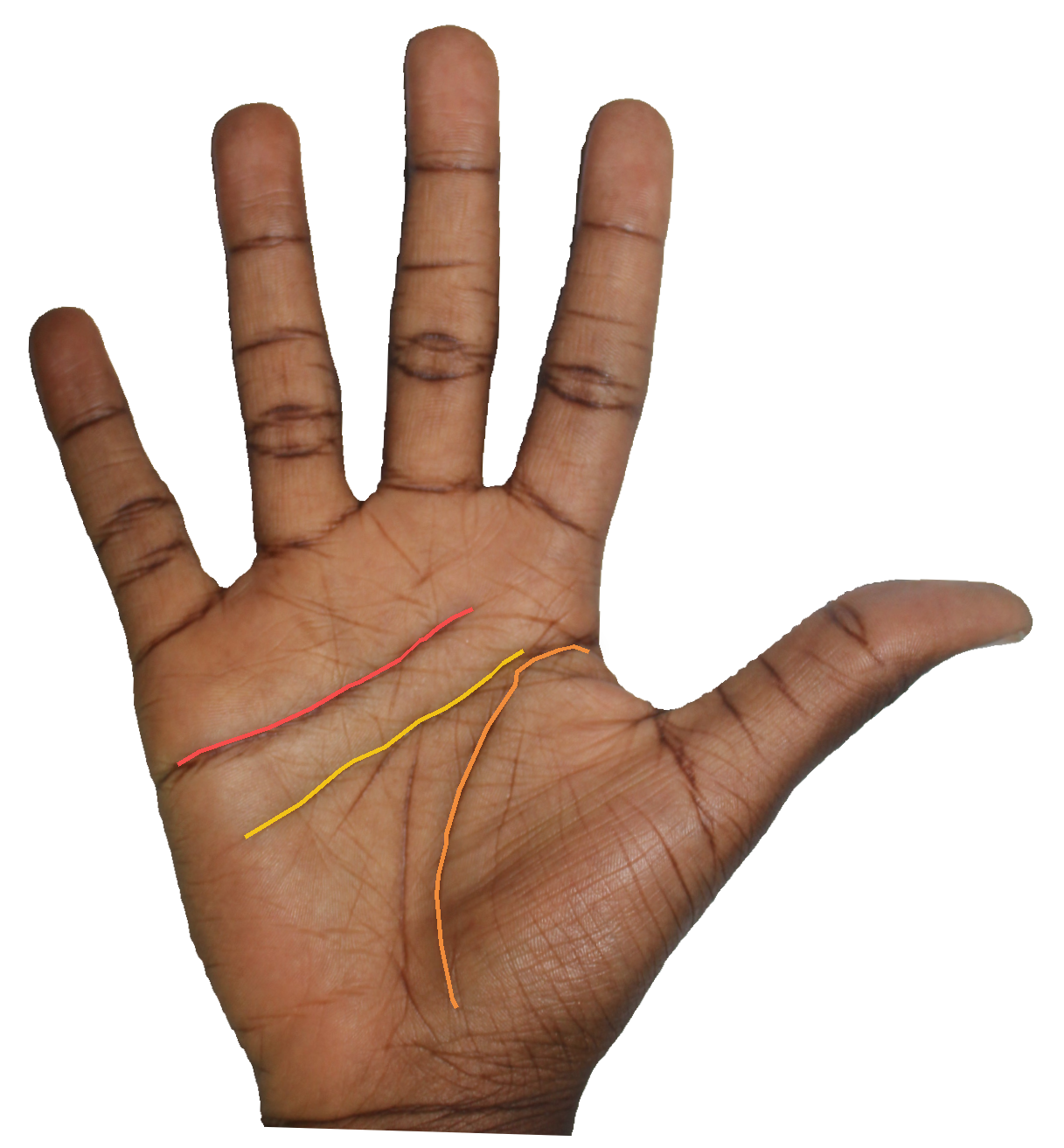
What does my heart line reveal about my emotional readiness for commitment? Of all the palm lines, the heart line is the one most directly associated with emotional life — its length, its starting point, its depth, and especially the way it ends are read by classical palmists as a kind of summary of how the person experiences love. The CV pipeline detected your heart line as the topmost of the three major lines, traversing the palm above the head line. The measurements that follow describe what palmistry traditions from Cheiro to Benham have associated with emotional readiness, and where they would say the natural strengths and the work-in-progress edges are.
Cheiro's Language of the Hand opens his chapter on the heart line with a distinction that often surprises modern readers. He argues that a long heart line — meaning one that reaches all the way across the palm — is not unambiguously better than a shorter one. The long heart line indicates deep emotional capacity, but Cheiro consistently warns that the longest heart lines often belong to people who have not yet learned to protect their emotional life from premature openness. Benham's later treatment refines this: he reads the heart line less in absolute terms than in relation to the head line, arguing that what matters most for committed partnership is the relationship between the two lines, not the length of either one alone.
The starting point of your heart line — where it originates beneath the index finger area — is the first major signal in your particular palm. Palms in which the heart line starts beneath Jupiter (the index finger mount) are traditionally read as belonging to people whose love is idealistic in nature. Cheiro associates this starting point with people who fall in love with potential, with shared values, and with the deeper character of a partner rather than primarily with surface attraction. This is not a romantic compliment; it is a structural observation. People with Jupiter-mounted heart lines tend to have higher standards for partnership and to be more disappointed when those standards are unmet. The readiness question for this configuration is not whether you can love — clearly you can — but whether you can love a real person with real limitations rather than the idealized version you initially projected.
The head line and its relationship to the heart line is the second major signal. In your palm, the two lines run on parallel but separate paths, with visible space between them. Benham would call this a "balanced" configuration, distinct from palms in which the lines merge, cross, or run unusually close. The balanced configuration is associated with people whose intellectual and emotional faculties operate independently — meaning you can think clearly about a relationship even when you feel strongly about it, and you can feel strongly about it even when the analytical part of you is hesitant. For the readiness question, this is a genuine strength: it means you are unlikely to be swept into commitment purely by feeling, and unlikely to talk yourself out of one purely by analysis. The work for someone with this configuration is integration — making sure the heart and head are speaking to each other rather than operating in parallel silos.
The mounts beneath your fingers add a second layer of detail. The mount of Mercury, just beneath the little finger, is associated in traditional palmistry with communication style in close relationships. The mount of Saturn, beneath the middle finger, is associated with the capacity for solitude and patience. The mount of the Sun, beneath the ring finger, is associated with creative expression and joy. And the mount of Jupiter, beneath the index finger, is associated with ambition and self-respect in relationships. The CV pipeline detected each of these mounts with measurable prominence; their relative strengths in your palm are visible in the overlay above. For the commitment question, palmists from Benham forward have noted that the Mercury and Saturn mounts together are the most diagnostic — Mercury for how you talk about hard things, Saturn for whether you can be still with another person without needing to fill the quiet.
A particular observation that classical palmistry makes about commitment readiness is that no single line is decisive. Cheiro is firm that committed partnership is a function of the whole hand, not of any single line — and specifically that the depth and continuity of the heart line matter more than its length, because depth indicates emotional steadiness while continuity indicates the capacity to remain present through difficulty. In your palm, the line appears continuous without major breaks — a configuration Cheiro associates with emotional reliability under pressure. This does not mean you have never been hurt or never withdrawn; it means that when you are committed, you tend to stay committed through the periods when leaving would feel easier.
The honest reading for the question of readiness is this: the configuration of your palm describes someone who is emotionally well-equipped for committed partnership and has been for some time. The work, in palmistry's traditional framing, is not to acquire readiness you don't have. It is to take the readiness you already have seriously enough to act on it — to recognize when a partner meets the standards your Jupiter mount sets without dismissing them for being human, and to use the intellectual independence between your head and heart lines for the integration work it was made for rather than letting it function as a defense.
One final note that Cheiro returns to repeatedly: palmistry treats the hand as a record of who you have been, not a sentence on who you must remain. The lines change. They become deeper or fainter over years in response to the choices the person makes. Whatever your hand shows today, the heart line you have in a decade will reflect the emotional life you chose to live in the interval.
If the question is whether you are ready, the configuration says yes. The work the configuration asks of you is not to become more ready; it is to be willing to accept that readiness comes with risk, and that a hand built for committed partnership does not protect you from the experience of loving someone real. Cheiro's quiet advice to readers in your configuration: the partner you can love well is not the partner who matches your initial vision. It is the partner whose actual self you are willing to choose, knowing what you know about yours.