Palm reading for Sarah Mitchell: how does my heart line read my capacity for deep partnership?
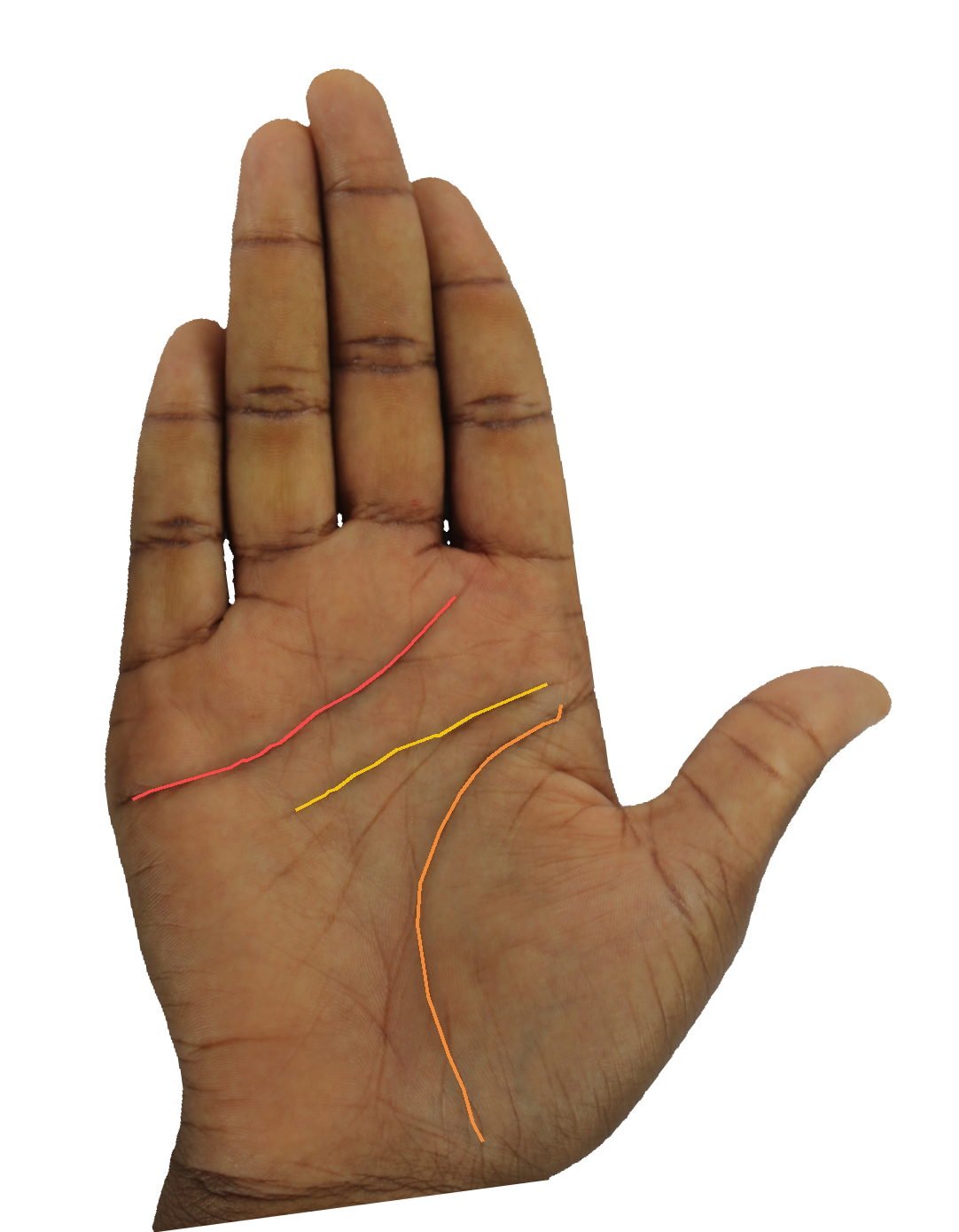
How does my heart line read my capacity for deep partnership? Of all the variables a palm reading can examine, the heart line is the one most directly associated with the question Sarah Mitchell is bringing. This reading takes the question — How does my heart line read my capacity for deep partnership? — and works it through the classical palmistry framework as inherited from Cheiro's Language of the Hand and the later 20th-century palmistry literature. The reading does not predict events; it describes the architectural signature the palm carries and the kind of choices the architecture supports best.
Cheiro's Language of the Hand opens his chapter on the heart line with a distinction that often surprises modern readers. He argues that a long heart line — meaning one that reaches all the way across the palm — is not unambiguously better than a shorter one. The long heart line indicates deep emotional capacity, but Cheiro consistently warns that the longest heart lines often belong to people who feel so much that the feeling becomes overwhelming and produces the very emotional volatility that the line is supposed to indicate stability against. The reading is firm: depth of capacity is one variable; the discipline to channel it is another. Both are required.
The starting point of the heart line is the variable that classical palmistry treats as most diagnostic of emotional style. A heart line that begins beneath the Mount of Jupiter (the pad under the index finger) indicates an idealist — someone whose love is organized around principle, vision, and the partner-as-collaborator-in-meaning. A heart line that begins beneath the Mount of Saturn (under the middle finger) indicates a more practical and sometimes more guarded emotional style — love organized around competence, reliability, and the partner-as-collaborator-in-life-structure. Neither is better; the reading must match the architecture.
The curve of the heart line is the second variable. A heart line that curves upward toward the fingers indicates emotional expressiveness — the person who can name what they feel and prefers to. A heart line that runs straighter across the palm indicates a more reserved emotional style — emotion held privately and expressed through action rather than statement. Long-standing partnerships often work best when these styles complement rather than match: the expressive partner draws the reserved partner into articulation, and the reserved partner steadies the expressive partner with consistent action. Two expressive partners often produce a relationship of high articulation and lower follow-through; two reserved partners often produce a relationship of high competence and low expressed warmth. Neither failure mode is unfixable, but both are predictable from the line configuration.
The depth of the heart line — how clearly it is etched into the palm — is the third variable. A deeply etched heart line indicates emotional gravity: the person whose feelings, once formed, last and weigh meaningfully. A more lightly etched heart line indicates greater emotional fluidity — feelings change quickly, and the person's emotional state is more situationally responsive. The deeply etched line carries the risk of holding onto resentments past their useful life; the lightly etched line carries the risk of underweighting commitments that the architecture would benefit from honoring.
The branches and breaks in the heart line are the fourth variable, and the most subject to overinterpretation. Classical palmistry reads small upward branches as relationships that produced lasting positive imprint and small downward branches as relationships that produced lasting negative imprint. Breaks in the line indicate periods of emotional reset — divorce, bereavement, the end of a defining friendship, a religious or philosophical conversion that reorganized the emotional architecture. Modern palmistry treats these markings more cautiously; the imprints exist, but the interpretation should not be too specific without other corroborating signs in the chart.
For this week, the heart line's instruction is to identify the one emotional pattern that the line's configuration has been producing and to choose, deliberately, whether to continue producing it. The architecture is durable; the choices made within it are what produce a satisfying emotional life versus a structurally adequate but unsatisfying one. The line indicates the architecture, not the choices. The choices remain free.
Classical palmistry, as systematized by Cheiro in the late 19th century and refined by William Benham and the later traditions, treats the palm as a long-form record of the architecture an individual carries — the durable signature that persists across decades and shapes how each new circumstance is met. The heart line is one element of that record, and the reading derives meaning from how it integrates with the rest of the hand's architecture rather than from the element in isolation. For Sarah Mitchell, the integration is what produces the actionable instruction; the isolated reading would be both less accurate and less useful.
The weekly application of this reading differs from a one-time fortune telling. The architecture indicated by the palm does not change week to week; what changes is the texture of choices made within the architecture. This reading is pitched at the weekly scale specifically because the weekly scale is where the architecture actually expresses in lived life — through the first meeting of the week, the first difficult conversation, the rest taken or skipped, the commitment honored or deferred. Small choices accumulate into the texture of an architecture honored versus an architecture overridden.
What Sarah Mitchell can expect to register inwardly during a week in which the heart line's indication is being honored is a specific quality of settled engagement that is distinct from the agitation of overriding the architecture and distinct from the flatness of avoiding it. The settled engagement is the architecture confirming the week's choices fit it. The agitation is the architecture's signal that a choice has been made that does not fit. The flatness is the architecture's signal that a choice has been avoided that should have been engaged. Classical palmistry treats all three signals as accurate information rather than as mood.
The historical context is also worth naming. The classical palmistry tradition reads the heart line as part of a body of knowledge developed over centuries — from the early Indian samudrika shastra texts through the Greek and Roman cheiromantic writings, through the medieval European tradition, and into the modern systematization by Cheiro, Benham, and the 20th-century palmistry literature. The reading offered to Sarah Mitchell here draws from this accumulated tradition rather than from any single author's framework, and the instructions reflect the convergence of multiple sources rather than the idiosyncratic claims of any one.
Finally, the reading is firm that the palm's architecture is durable. Sarah Mitchell will not stop carrying this architecture by the end of this week; it persists regardless of how it is used. The choice this week is whether to use it deliberately — by acting on the heart line's indication where it has been deferred and honoring the architectural support where it has been overridden — or to continue overriding it and absorbing the cumulative cost of the override. The reading recommends the deliberate use. The architecture is built to support it. The work is to take the support.
The heart line for Sarah Mitchell this week: the architecture is durable, the indication is specific, and the choice is available. Use the architecture deliberately rather than overriding it. The reading does not promise outcomes; it clarifies what the architecture is built for. Use the clarification.