Three-card tarot reading: Is it too late to go back to school at forty?
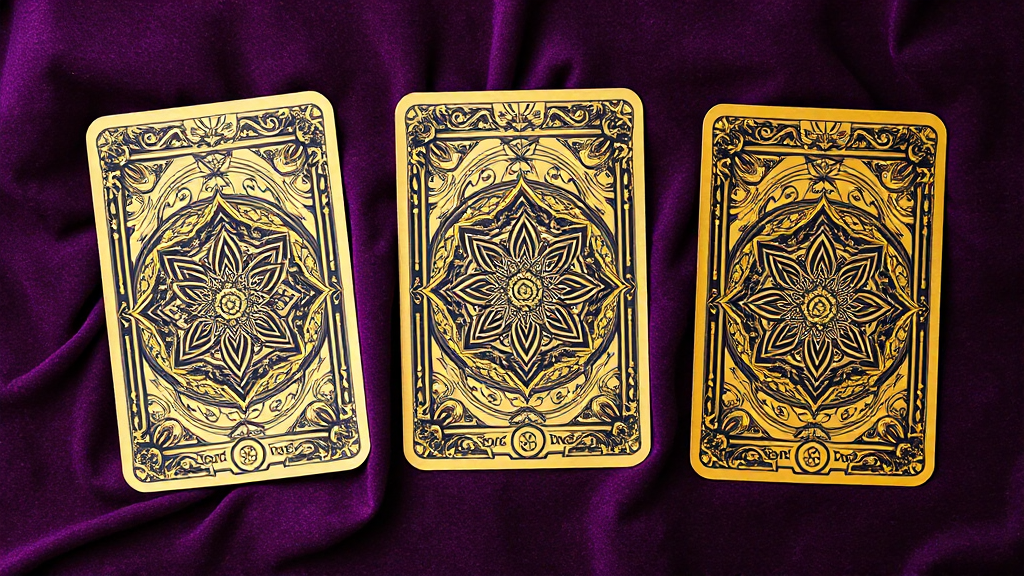
Is it too late to go back to school at forty? The question is asked most often by people who have a specific program in mind and are quietly looking for permission to apply. The three-card spread drew Wheel of Fortune in the Past, The Magician in the Present, and The World in the Future. The configuration is rare in this kind of reading: there are no warning cards, no cards of obstacle, no Tower or Death or Devil. Pollack writes that the Wheel-Magician-World sequence is one of the most encouraging patterns in classical tarot when it appears in response to a learning question, because it describes someone whose timing has aligned with their preparation in a way that does not happen often.
Wheel of Fortune in the Past position is the card that names how you arrived at this question. Thoth tradition reads the Wheel as the intersection of cyclic timing with individual choice, and Pollack emphasizes that the Wheel always appears for people whose moment of decision has been shaped by forces partly within and partly outside their control. In the Past position, the card is saying that the question is not arising from restlessness or vanity. The combination of work, family, and personal circumstances that has led you to be considering this now is not random. The Wheel does not appear for people who could go back to school any time and are just dithering. It appears for people whose conditions have shifted in a specific way that makes the next two to five years uniquely suited for this kind of investment, and for whom waiting will likely close the window rather than improve it.
The Magician in the Present is where the diagnostic work happens. Pollack reads The Magician as the figure who has the tools, the focus, and the will to manifest something into form — and explicitly notes that the card never appears for someone who lacks the underlying competence. In the Present position, the card is naming a structural fact about you that is easy to lose sight of in the question's anxiety. You have, at forty, more of what learning actually requires than you had at twenty. You have better metacognition. You know how you learn. You can sit with difficulty. You have professional context to attach new material to. You have an internal compass for what is worth learning and what is academic theater. The card is not saying that the learning will be easy. It is saying that you bring qualities to it that traditional-age students do not yet have, and that these qualities significantly compensate for whatever neurological speed-of-acquisition advantage younger students have. The Magician's appearance is structural confirmation, not optimistic encouragement.
The World in the Future is the card that determines whether the investment is worth the cost. Pollack reads The World as the integration of a major life cycle — the moment when something that has been quietly carried becomes part of who you are rather than a separate project. In the Future position, the card is making a specific argument about completion. The degree or credential is real and useful, but the deeper integration the World describes is about the person you become through the work. People who finish midlife education describe a particular kind of confidence that does not come from any other source — the felt knowledge that you can still acquire major new competence, that you are not done forming. This integration is what The World is promising. It is also what most people underestimate when they calculate whether the investment is worth it.

The practical question the spread does not directly address is the cost. Going back to school at forty involves money, time taken from family and career, energy that could be spent elsewhere. The cards' silence on this is meaningful. The configuration is supporting the decision without endorsing recklessness about how to do it. Most successful midlife students do not quit their job to study full-time. They do it part-time, on a longer timeline, with explicit conversations with their family about what the household is and is not capable of absorbing during the program. The Wheel-Magician-World sequence supports the structured approach, not the dramatic one.
One specific observation that Pollack returns to about World-in-the-Future readings: the integration happens during the work, not at the end. The most common mistake midlife students make is treating the credential as the goal and the years of study as the cost. The cards are describing the opposite. The years of study are the deeper investment — the integration is mostly built then — and the credential is the marker that the integration has occurred. Going in with this orientation tends to make people more present with the work and less anxious about completion timelines.
Apply to the program. Pick a part-time format if one is available. Have the explicit conversation with your family about what the next two to five years will require, and what they are getting in return for it. The Wheel has aligned conditions you cannot reproduce at will. The Magician is the competence you have built that traditional-age students do not yet have. The World is what becomes available once the work is done — not the degree, but the version of yourself that knows it can still grow.
Based on these sources
-
Crowley/Thoth Tarot
Aleister Crowley + Lady Frieda Harris (1944) — esoteric/occult system with deeper symbolism and Kabbalistic correspondences.
-
Spread position
The structural meaning of where a card falls in a spread (Past, Present, Future, Challenge, etc.) — applies to every reading.
-
Rider-Waite-Smith Tarot
Arthur Edward Waite + Pamela Colman Smith (1909) — the most widely-used modern tarot deck and interpretive baseline.